Oku Okut Press reserves the right to publish and distribute the book. Permission from the publisher is required for any commercial use.
A Graduate Research Guide to Sufi Studies
Tasavvuf Araştırmaları Lisansüstü Çalışmalar Kılavuzu
Interest in postgraduate education and training in the field of Sufism in Türkiye has been steadily increasing. In order for graduate students and their advisors to obtain meaningful results from their scholarly efforts, it is essential to follow internationally recognized research methodologies and academic writing techniques and standards. A thesis prepared for defense must be written in accordance with research methods, academic ethics, and writing conventions. This book, the outcome of an editorial collaboration, includes six interrelated sections that provide guidance on research methods and writing techniques applicable to postgraduate studies in Sufism. Among its contents are recommendations concerning academic methodology, discussions on the use of artificial intelligence—its principles, possibilities, and risks—along with topics such as Sufi literature, identification of a manuscript’s author, and applied book review practices. While focusing primarily on Sufism as a subdiscipline of the Basic Islamic Sciences, the book also aims to guide researchers working in other theological disciplines, as well as the young academics who supervise them. It reflects the insights and experiences of scholars who continue to lead academic and intellectual activities in the field. The book further emphasizes the importance of offering guidance in issues such as data compilation, evaluation, and analysis, and addresses the challenges and obstacles that may arise in these processes. Its goal is to raise awareness of common mistakes encountered by those conducting research in Sufism, assist candidates preparing or writing their theses, and contribute modestly to enhancing the academic quality of dissertations in the field. As a qualitative study, the work presents several recommendations and experiences regarding the application of international academic and scientific research standards to the field. It first outlines the questions and problems commonly faced in postgraduate studies within Sufism, then evaluates how established academic methodologies can be adapted to the field, drawing upon the writings of recognized scholars. Each contributor offers personal insights from their own perspective, while also providing informative notes on key Sufi concepts throughout the text. The final and most substantial section of the book includes a summary guide, a list of recommended readings, explanations of common stylistic and grammatical errors, and appendices on the correct use of punctuation marks, serving as a practical resource for graduate students and researchers alike.
Türkiye’de tasavvuf alanında lisansüstü eğitim ve öğretime yönelik ilgi her geçen gün artmaktadır. Lisansüstü öğrenciler ve danışmanlarının ilgili bilim alanlarına katkı sağlamak adına sarf ettikleri emeklerden gerekli neticelerin elde edilebilmesi için takip edilmesi gereken genel kabul görmüş araştırma yöntemleri ve akademik yazım teknikleri ve kuralları bulunmaktadır. Savunması yapılacak tezin araştırma yöntemlerine uygun hazırlanması, araştırma etiğine ve yazım kurallarına riayet edilerek kaleme alınması esastır. Editöryal bir çalışmanın semeresi olan bu kitapta tasavvuf alanında yürütülecek lisansüstü çalışmalarda izlenecek araştırma yöntemleri ve yazım tekniklerine dair bazı tavsiyeler başta olmak üzere, son yıllarda dolaşıma sokulan yapay zekâ kullanımı, ilkeler, imkanlar ve riskler, tasavvuf literatürü, bir yazma eser müellifinin tespiti, uygulamalı kitap tanıtımı gibi birbiriyle irtibatlı altı adet bölüm yer almaktadır. Temel İslam Bilimlerinin bir alt disiplini olan Tasavvuf bilim dalı merkezde tutulmak kaydıyla diğer dini disiplinlerde akademik çalışma yapmak isteyen araştırmacılara ve onlara danışmanlık yapan genç akademisyenlere yol gösterilmesi amaçlanmıştır. Bu çalışmalar yapılırken kendileri de halen akademik ve ilmi faaliyetlere öncülük eden hocaların tavsiyeleri ve şahsi tecrübeleri dikkate alınarak böyle bir ürün elde edilmiştir. Yine bu kitapta lisansüstü eğitim ve öğretim kapsamında yürütülecek araştırmalarda, derleme ve değerlendirme gibi konularda ilgili süreçlerde karşılaşılabilecek zorluklar, riskler, engeller vb. konularda rehberlik edilmesinin önemine vurgu yapılmıştır. Keza tasavvuf alanında araştırma yapacak ve yapanların karşılaşacakları muhtemel hatalara dair farkındalık oluşturmak, alanı seçecek, tez yazmaya başlayacak ya da tez yazımında belli bir aşamaya gelen adaylara yardımcı olmak, alandaki tezlerin kalitesini artırmak adına mütevazı bir katkı sunulması hedeflenmiştir. Nitel araştırma hüviyetindeki bu çalışmada uluslararası ölçütlere uygun akademik/bilimsel araştırma yöntemleri ve yönelimlerinin alana uygulanması hususunda bazı tavsiye ve tecrübeler dile getirilmiştir. Çalışmanın detayı bağlamında öncelikle tasavvuf anabilim dalında lisansüstü çalışmalarda karşılaşılan soru ve sorunlar hakkında genel bir çerçeve çizilmiş, akademik/bilimsel araştırma yöntemlerinin alana uygulanması hususunda alanda bilinen akademisyenlerin yazılı çalışmaları dikkate alarak genel bir değerlendirmelerde bulunulmuş, hocaların her biri kendi zaviyelerinden bazı şahsi tekliflere yer vermiş, bunlarla birlikte yeri geldikçe metin içinde adaylara tasavvufun temel konularında bilgilendirme yapılmıştır. Kitabın ağırlıklı bölümünü teşkil eden son kısımda özet kılavuz, alan okumalarını ihtiva eden kitaplar listesi, anlatım bozukluklarına dair bilgiler ile noktalama işaretlerinin doğru kullanımı konusunda bazı ekler konulmuştur.
Arslan, Hüsamettin. Epistemik Cemaat, İstanbul: Paradigma, 2007.
Baş, Eyüp-Erkoçoğlu, Fatih. İslam Tarihçiliğine Adanan Altın Bir Ömür Prof. Dr. Mustafa Fayda. Ankara: Diyanet Vakfı Yayınları, 2023.
Başgil, A. Fuat. Gençlerle Başbaşa. İstanbul: Yağmur Yayınları, 1983.
Buehler, Arthur F. “Yirmi Birinci Yüzyılda Tasavvuf Araştırmaları: Tetkik Bağlamını Genişletmek”, çev. M. Atalay, Sakarya Üniversitesi İlahiyat Fakültesi Dergisi, c. XVII, Sayı 31 (Haziran 2015, ss.193-226.
Büyükçınar, Ahmet Muhtar. Hayatım İbret Aynası. Haz. C. Okuyucu, İstanbul: Ensar Neşriyat, 2020.
Cebeci, Suat. Bilimsel Araştırma ve Yazım Teknikleri. İstanbul: Alfa, 2010.
Cebecioğlu, Ethem. “Alandışı/Laymen’lerin Tasavvufu Anlayamamalarının Bazı Nedenleri Üzerine I”, Aylık İslam Dergisi, İstanbul 1997, Sayı 164, İstanbul: 1997, ss. 32-34.
Coşan, M. Esad. Dilimiz ve Kültürümüz. İstanbul: Server Yayınları, trz.
Çakan, İsmail Lütfi. Hayat Mektebinden Notlar. İstanbul: Çamlıca Yayınları, 2019.
Çakan, İsmail Lütfi. Hadis Öğrenimi Tarihi ve Güncel Boyut. İstanbul: İFAV Yayınları, 2016.
Demirli,Ekrem. https://youtube.com/playlist?list=PLADMQ9VgSO5nbfjw8b0rqemYdBj8RLJlH&si=lI_vkmcqbcxJGGxu (Erişim: 21.05.2025).
Deniz, Gürbüz. Bilgi Varlık ve Ahlak, Ankara: Eskiyeni Yayınları, 2024.
Devellioğlu, Ferit. Osmanlıca Türkçe Ansiklopedik Lügat. Ankara: Aydın Kitapevi, 2009.
Doğan, D. Mehmet. Doğan Büyük Türkçe Sözlük. Ankara: Yazar Yayınları, 2014.
Ebu Gudde, Abdülfettah. İlim Uğrunda. çev. F. Beşer, İstanbul: Ebru Yayınları, 1985.
Eco, Umberto. Tez Nasıl Yazılır?. Çev. B. Parlak, İstanbul: Can Yayınları, 2018.
Erkaya, Mahmud Esad. “Günümüz Türkiyesi’nde Tasavvufu Tenkit Amaçlı Yapılan Bazı Kitaplara Dair Bir Değerlendirme”, Tasavvuf Dergisi, 2020, XXIII, 36 s.
Erünsal, İsmail E. Yirmi İki Mürekkep Damlası. haz. H. Solak, İstanbul: Timaş Yayınları, 2021.
Ev, Halit. “İlahiyat Alanında Lisansüstü Eğitim ve Sorunları”, Türkiye’de Din Eğitimi ve Sorunları, ed. M. Köylü. İstanbul: Dem Yayınları, 2018, 238-274.
Fazlıoğlu, İhsan. Kendini Aramak, İstanbul: Paperense Yayınları, 2016.
Gazzâlî. İhyâu ulûmi’di-dîn, tah. A. Hâlidî, Beyrut: Dâru’l-Erkam, 1-4, 1998.
Gazzâlî. Mîzânü’l- Amel. Mısır: 1328.
Gazzâlî. el- Mustasfâ min ilmi’l- usûl. tah. A. Mahmud Ömer Beyrut: Dâru’l-Kütübi’l-İlmiyye, I-II, 1971.
Güney, Necmeddin, “İslam Hukuku Araştırmalarında Yöntem”, NEÜ Ders Notları, 2024.
Hamidullah, Muhammed. İslam’a Giriş. Ankara: Diyanet Vakfı Yayınları, 2017.
Kalın, İbrahim. Öze Yolculuk. İstanbul: İnsan Yayınları, 2023.
Kara, Mustafa. Metinlerle Osmanlılarda Tasavvuf ve Tarîkatlar. İstanbul: Sır Yayımcılık, 2004.
Kara, Mustafa. “Mustafa Kara ile Söyleşi”, Tasavvuf Dergisi 4/10, Ankara: 2003, 455-522.
Kara, İsmail. İçimden Geçen Günler. İstanbul: Dergâh Yayınları, 2022.
Karasar, Niyazi. Bilimsel Araştırma Yöntemi. 24. Baskı, Ankara: Nobel, 2012.
Kavakçı, Y. Ziya. İslam Araştırmalarında Usûl. Ankara: DİB Yayınları, 1982.
Kılıç, Ali İhsan. “Tasavvuf Tarihi Literatürü ve Yapay Zekâ Perspektifleri: Karşılaştırmalı Bir İnceleme”, Din Bilimleri Akademik Araştırma Dergisi, c. 24, S. 3, ss. 233-258.
Komisyon. İSNAD Atıf Sistemi. 2. Edisyon, Ankara: Kalkan Matbaacılık, 2019.
Komisyon. Bilimsel Araştırma Süreçleri.ed. Ö. Güngör, Ankara: Grafiker Yayınları, 2018.
Koz, Sabri. Üstatlarımız ve Karantina Günlükleri. ed. M. E. Kala, Ankara: TYB, Ankara 2020.
Knysh, Alexandar. Tasavvuf Tarihi. Terc. İ. Durdu, İstanbul: Ufuk Yayınları, 2011.
Kuşçuoğlu, Aslıhan. “İlahiyat Fakültelerindeki Araştırma Teknikleri Dersi: Bir Durum Çalışması”, AÜİF Dergisi, 59: 1, (2018), 297-316).
Kutluer, İlhan. “Bir Metni Tasavvufî Kılan Nedir? “, Osmanlı’da İlm-i Tasavvuf. ed. E. Alkan-O.S. Arı, İstanbul: İSAR Yayınları, 15-47.
Kutluer, İlhan. Yitirilmiş Hikmeti Ararken. İstanbul: İz Yayıncılık, 2017.
Kütükoğlu, S. Mübahat. Tarih Araştırmalarında Usûl. İstanbul: Kubbealtı Yayınları, 1995.
Ocak, A. Yaşar. “Türkiye’de 1980 sonrası Osmanlı Dönemi Akademik Nitelikli Tasavvuf Tarihi Araştırmalarına Genel Bir Bakış”, Dünden Bugüne Osmanlı Araştırmaları. ed. A. Akyıldız, S.T. Buzpınar, M. Sinanoğlu, İstanbul: İSAM Yayınları, 2007, ss. 217-225.
Ocak, A. Yaşar. Arı Kovanına Çomak Sokmak. haz. H. Şahin, İstanbul: Timaş Yayınları, 2014.
Onat, Hasan. "Bilgi, Bilim ve Yöntem”, İslam Bilimlerinde Yöntem. ed.H. Albayrak Ankara: Ankuzem Yayınları, 2005., ss.2-26.
Öz, Mustafa. Yılların Özü Hayatım ve Hatıralarım. İstanbul: Ensar Neşriyat, 2008.
Öztürk, Nazif. Üstatlarımız ve Karantina Günlükleri. ed. M.E. Kala, Ankara: TYB, 2020, 266-273.
Ramazan, Yasin. Araştırmanın Alfabesi. İstanbul: Babil Kitap, 2021.
Sayar, A. Güner. A. Süheyl Ünver Hayatı, Şahsiyeti ve Eserleri. İstanbul: Ötüken, 2023.
Schimmel, Annemarie. Doğudan Batıya. Terc. Ö. E. Akbulut, İstanbul: Sufi Kitap, 2017.
Schopenhauer, Arthur. Aforizmalar. Çev. M. Tüzel, İstanbul: İş Bankası Yayınları, 1998.
Sırma, İ. Süreyya. Pervari’den Paris’e. haz. A. Demirci, İstanbul: Beyan Yayınları, 2016.
Tan, M. Nedim. "Mikro Sosyal Bilimlerin Birikimi Tasavvuf Araştırmacısına Ne Söyler?" APJIR Academic Platform Journal of Islamic Research , vol.1, pp. 47-52, 2017.
Taş, Aydın. Araştırma Kılavuzu. Diyarbakır: Dicle Üniv. Yayınları, 2019.
Topçu, Nurettin. Millet Mistikleri. İstanbul: Dergâh Yayınları, 2009.
Topçu, Nurettin. Türkiye’nin Maarif Dâvası. İstanbul: Dergâh Yayınları, 2019.
Türkdoğan, Orhan. Bilimsel Değerlendirme ve Araştırma Metodolojisi. İstanbul: MEB Yay., 1995.
Türker, Ömer. İslam Düşünce Gelenekleri Kelam, Felsefe, Tasavvuf. İstanbul: KTB Yay., 2020.
Uludağ, Süleyman. “Süleyman Uludağ ile Röportaj: Tasavvuf, Tasavvuf ve Tarîkatlar ve Tasavvuf Sosyoloji İlişkisi Üzerine”. Akademik Platform İslami Araştırmalar Dergisi 1 / 2 (Temmuz 2017), 65-70.
Uludağ, Süleyman. “Başlangıçtan Günümüze Tasavvufta Usûl Meselesi”, İslami İlimlerde Metodoloji/Usûl Problemi Sempozyumu, İSAV, Üsküdar 20-21 Mart 2004, ss. 1041-1075.
Uludağ, Süleyman. “Süleyman Uludağ ile Söyleşi”, Tasavvuf Dergisi. Ankara: 2001. Sayı: 7, ss. 33-92.
Ülken, Hilmi Ziya. Anadolu Kültürü Üzerine Makaleler. Ankara: Doğubatı, 2021.
Unat, F. Reşit. Hicrî Tarihleri Milâdiye Çevirme Kılavuzu. Ankara: TTK, 1984.
Yılmaz, Ömer. Geçmişten Günümüze Tasavvuf ve Tarîkatlar. Ankara: Akçağ Yayınları, 2019, ss. 462-465.
There are 62 references in total.
Show More References
Copyright (c) 2025 Oku Okut Press

This work is licensed under a Creative Commons Attribution-NonCommercial 4.0 International License.
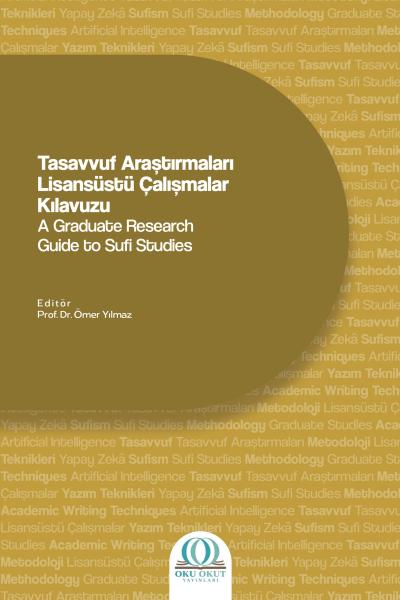
A Graduate Research Guide to Sufi Studies
Downloads
Publication Information
-
Publication TypeEdited Volume
-
Published21 October 2025
-
Series
-
Series Position1
-
Categories
-
ISBN-10 (02)625-95679-8-3
-
ISBN-13 (15)978-625-95679-8-3
-
Proprietary (01)47
-
Date of first publication (11)10/21/2025
Details about this monograph
Yilmaz, Omer (ed.). A Graduate Research Guide to Sufi Studies. critical ed . Ankara: Oku Okut Press, 2025. https://doi.org/10.55709/okuokutyayinlari.83